
Israel To Palestine / Palestine To Israel: All You Need To Know In 2026

This post is all about Israel To Palestine and Palestine To Israel: distances, modes of transportation and how to get between each area; what parts of the land are called “Palestine” and “Israel”; where Gaza and the West Bank are in relation to Tel Aviv and Jerusalem; who can visit and enter each; and introductory information into the conflict for beginners.
Why listen to me? I lived in Israel for two years, have participated in multiple archaeological excavations, and hold a degree in Archaeology from Tel Aviv University, so I’ve traveled pretty extensively around Israel.
Beyond personally experiencing living in Israel and traveling around the country, I’ve personally heard from and spoken with Jews, Arabs, Muslims, Druze and other people with varying opinions on the conflict.
So, whether you’re looking for strictly geographical info, or if you’re wanting to dive into the region and conflict more, read on!
Map of Israel To Palestine / Palestine To Israel
Learn about the false maps circulating on the internet from Honest Reporting here.
First, Where is Palestine?
Palestine refers to a region in the Middle East situated on the eastern coast of the Mediterranean Sea. It shares borders with Israel to the west, Jordan to the east, and has boundaries with Egypt and Syria.
Today, the term “Palestine” predominantly refers to the West Bank and Gaza Strip.
The West Bank (Judea and Samaria), located to the east of Israel, is home to cities such as Ramallah and Bethlehem.
Meanwhile, the Gaza Strip lies along the Mediterranean coast, separated from the rest of Palestine by Israeli territory.
The political status and control over these regions have been central to the Israeli-Palestinian conflict.

The historical understanding of the term “Palestine” is multifaceted.
Ancient Israel was a distinct entity with its own historical and cultural heritage. The land witnessed the rise and fall of various civilizations, including the Israelites. Over the centuries, the region experienced changes in rulership, from ancient Israel to the rule of Arab Caliphates and more.
The term “Palestine” first came into use during the Roman period when the Romans referred to the region as “Syria Palaestina” after suppressing a Jewish revolt. Subsequently, the land witnessed multiple rulerships, including Byzantine, Arab Caliphates, Crusaders, the Ottoman Empire, and the British Mandate (Mandatory Palestine).
In the modern era, the geopolitical landscape underwent significant changes, leading to the establishment of the State of Israel in 1948. This marked a distinct chapter in the history of the region, with Israel becoming an independent nation separate from the territories known as the West Bank and Gaza Strip.
Understanding the historical complexities provides insight into the layered narratives surrounding the term “Palestine” and its evolving significance over time.

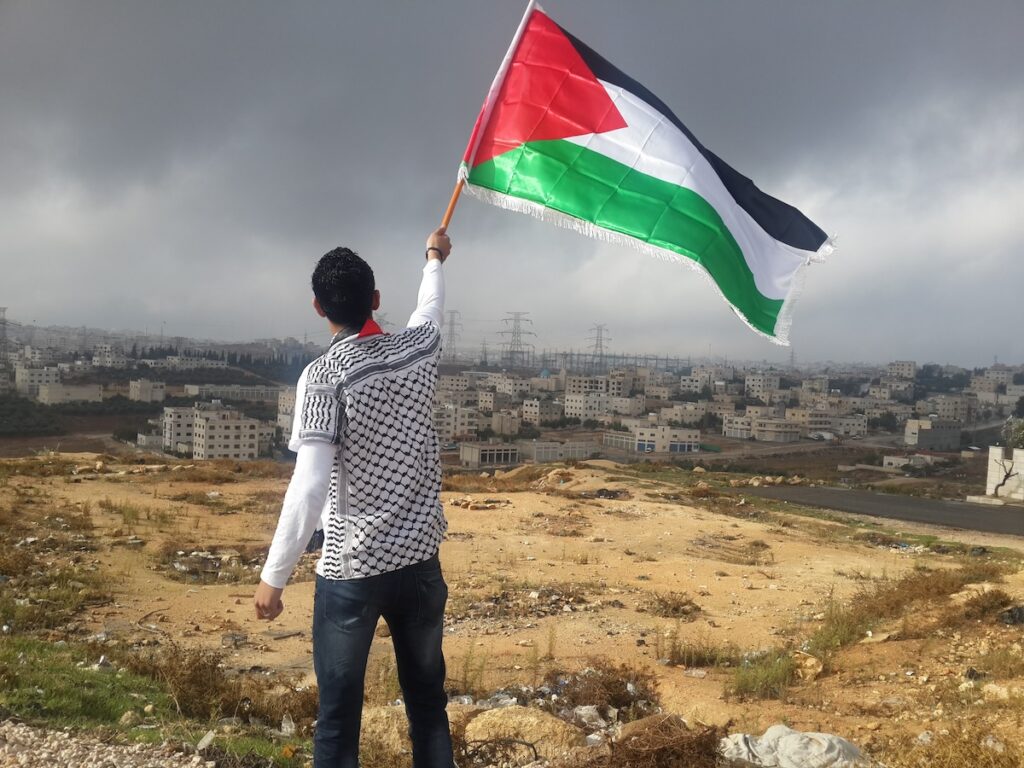
Israel To Palestine / Palestine To Israel: Distances
Here are the land and air distances from major Israeli cities to Palestine (Gaza and the West Bank) and back:
Jerusalem to Gaza / Gaza to Jerusalem
- Land/Car Distance: Approximately 75 kilometers (46.6 miles)
- Air Distance: Approximately 58 kilometers (36 miles)

Tel Aviv to Gaza / Gaza to Tel Aviv
- Land/Car Distance: Approximately 64 kilometers (39.8 miles)
- Air Distance: Approximately 50 kilometers (31 miles)

Jerusalem to West Bank / West Bank to Jerusalem
- Land/Car Distance: Approximately 48.4 kilometers (30.1 miles) via Ramallah-Nablus/Route 60, or approximately 39.3 kilometers (24.4 miles) via Begin Blvd/Route 50
- Air Distance: Approximately 20.52 kilometers (12.75 miles)

Tel Aviv to West Bank / West Bank to Tel Aviv
- Land/Car Distance: Approximately 89.5 kilometers (55.6 miles) via Route 5, 75.8 kilometers (47.1 miles) via Route 465, or 74.6 kilometers (46.4 miles) via Route 1 and Route 465
- Air Distance: Approximately 52 kilometers (32 miles)
- Air Travel Time: If traveling with an airplane with an average speed of 560 miles per hour, it takes approximately 0.06 hours (3.6 minutes) to arrive

Israel To Palestine / Palestine To Israel: Ways of Transportation & How to Get There
There are multiple ways for travelers to reach each destination within Israel/Palestine, from Jerusalem and Tel Aviv to Gaza and the West Bank, and vice-versa. They include:
1. Public Transportation:
- Buses: Public buses operate between major cities in Israel and the West Bank, connecting places like Tel Aviv, Jerusalem, and Bethlehem.
- Shared Taxis (Sherut): Shared taxis are convenient and relatively inexpensive. They operate on set routes and can be found at designated taxi stations.
2. Airports:
- Ben Gurion Airport (TLV): Located near Tel Aviv, Ben Gurion Airport is the main international airport in Israel.
- Yasser Arafat International Airport (GZA): Located in Gaza, this airport serves the Gaza Strip. However, its operational status may vary, so always check for updates.
3. Renting a Car:
- Renting a car is a great option for those who prefer flexibility in their travel. Rental agencies are available at major airports and cities in Israel, but if you have an Israeli license plate, you will not be safe in Gaza or many areas in the West Bank.
4. Taxi:
- Regular Taxis: Taxis are available in cities and can be hired for shorter distances within Israel and the West Bank. I recommend using the Gett app for set pricing for traveling within Israel.
- Private Taxi Companies: Various private taxi companies operate in both Israel and the West Bank.
5. Crossing Points:
- Allenby/King Hussein Bridge: This border crossing connects Jordan to the West Bank and serves as a crucial link for travelers between Israel and Jordan. It is the primary gateway for those traveling by land between the West Bank and Jordan.
- Erez Crossing: This crossing point is used for travel between Israel and the Gaza Strip. However, access is restricted, and travelers should check current conditions.
6. Shared Transportation Apps:
- Shared transportation apps, similar to ride-sharing services, are available in cities including Tel Aviv and Jerusalem.
7. Walking and Cycling:
- In many areas – especially cities – walking or cycling are common options, as well as electric scooters. Electric bikes and scooters can be rented throughout cities like Tel Aviv.


Palestine and Israel: A Brief History of Names & Borders
The term “Palestine” has historical roots, and the name was derived from the Philistines, who came from Philistia and are mentioned in the Hebrew Bible. The Philistines were known as the “Sea Peoples” or “Peleset” in Hebrew and Egyptian, probably originally from the Aegean or Greece, but possible from other areas of Asia Minor.
The Philistines, an Aegean people, conquered the Mediterranean coastal plain that is now Israel and Gaza in the 12th Century BCE. Before the Israelite conquest, the region was called Retenu by the Egyptians, and later terms like Canaan and Eretz Bnei Yisrael emerged.
The name “Israel” first appeared in the tenth century BCE, referring to the northern Jewish kingdom. During the Persian period, the area was called Coele-Syria.
The term “Palestine” made its first appearance in Greek literature in the 5th Century BCE, used by Herodotus to refer to the coastal strip inhabited by the Philistines.
In the 2nd century CE, after the Roman suppression of the Jewish revolt, Judea was renamed Palaestina in an attempt to diminish Jewish ties to the land.
Under the Ottoman Empire, “Palestine” was a general term for the land south of Syria. Many Ottomans and Arabs referred to it as Southern Syria. After the Muslim conquest, place names were converted to Arabic, with Palestina Prima becoming Filastin.
The name “Palestine” gained currency in Early Modern English and was used by the Crusaders. The Ottoman use of the term was not an official designation but a general description.
The modern concept of Palestine as a geopolitical entity gained prominence during the early 20th century. In 1920, the League of Nations granted Britain the mandate to administer the territory, which included the land that is now Israel, the West Bank, and Gaza – and those known as “Palestinian” included Arabs, Jews, Druze and more people.
The establishment of the State of Israel occurred in 1948. Following the end of the British mandate, Israel declared its independence, leading to the Arab-Israeli War. This war marked the beginning of the modern state of Israel, which emerged from the conflict victorious, gaining recognition from several countries.
Note: While Palestinians predominantly identify as Arab, not all Arabs are Palestinian. In Israel, the population is made up of various ethnicities, including Palestinians. In contrast, within the territories referred to as Palestine, the primary identification is Palestinian Arab, with a smaller presence of Palestinian Christians, though their numbers have decreased over time.
Regarding borders, various lines have been considered over the years, with significant events shaping them. The borders discussed include the Armistice Lines of 1949, the Six-Day War in 1967, and subsequent negotiations for peace, all contributing to the ongoing discussions about the region’s territorial boundaries.
In 2005, Israel unilaterally withdrew from the Gaza Strip, dismantling settlements and withdrawing military forces. This move aimed to alter the status quo and has been a significant event in the Israeli-Palestinian conflict, influencing the dynamics of the region.

Visiting Israel vs. Palestine: FAQs for Travelers & More
🌴 Why do tourists visit Palestine?
Tourists visit certain areas in Palestine to explore its rich history, ancient sites, and experience its diverse culture. Bethlehem, known for the birthplace of Jesus, the vibrant markets of Ramallah, and historical/archaeological sites like Herodium and Jericho are popular spots.

🌴 Can you cross into Palestine from Israel?
Travelers can cross into certain parts of Palestine from Israel, but entry conditions vary based on travel advisories. It’s crucial to check specific border restrictions, security conditions, and U.S. government recommendations.
🌴 Is it safe to travel to Palestine from Israel?
The safety of traveling to Palestine from Israel depends on specific regions and current security situations. U.S. citizens are advised to reconsider travel due to terrorism and civil unrest. Make sure to follow the U.S. Embassy’s alerts, maintain situational awareness, and exercise caution.
🌴 Can I enter Palestine from Tel Aviv?
While entry from Tel Aviv may be possible, you should always be cautious and stay informed about the security situation. Checkpoints and border areas may have increased security measures. Monitoring the U.S. Embassy’s website for the latest information is recommended.
🌴 Can Americans go to Palestine?
Americans can visit certain parts of Palestine, but caution is urged due to the terrorism and civil unrest advisory. It’s essential to follow U.S. travel advisories, maintain awareness of surroundings, and heed local authorities’ guidance.
🌴 Can Americans visit Gaza Strip?
Travel to the Gaza Strip is not recommended due to the ongoing armed conflict and terrorism. U.S. citizens are advised not to travel to Gaza. The security environment is extremely dangerous, with potential closures of crossings and limited access to information.
🌴 Is Palestine safe for tourists?
Tourist safety varies, and U.S. citizens are urged to reconsider travel to the West Bank. The situation is volatile, and attacks can occur without warning. Travelers should stay informed, avoid demonstrations, and follow emergency response officials’ instructions.
🌴 How safe is Jerusalem right now?
Jerusalem is generally safe and tours are continuing as planned in regular tourist areas, but it’s important to stay updated on the current situation. Going with a tour guide is encouraged.

🌴 Can Jews enter Gaza?
Access to Gaza is restricted, and entry is challenging due to the security environment. For Jews who are not Israeli or have other Passports, they technically can enter, but it’s not safe. Israelis cannot enter Gaza safely. U.S. citizens, including Jews, should be aware of the risks, follow travel advisories, and consider alternative travel plans.

🌴 Can Jews visit Bethlehem?
Jews who are not Israeli or have non-Israeli passports can visit Bethlehem, but it’s important to stay informed about the security situation. U.S. citizens are advised to reconsider travel to the West Bank, including tourist destinations like Bethlehem.
🌴 Can Israeli Jews enter Palestine?
Israeli citizens face restrictions on traveling to Palestinian territories. They are prohibited from using the Allenby/King Hussein Bridge crossing and entering Gaza. Additionally, Israeli citizens are generally not allowed to travel to parts of the West Bank under Palestinian Authority control, including Bethlehem and Jericho.
The reason behind this prohibition is primarily for security concerns, as violence is likely. While Israeli Arabs can travel more freely into these territories, Israeli Jews are subject to restrictions due to safety considerations. Signs at entrance points explicitly state that Israelis, not just Jews, are not allowed to cross.
The lack of bypass roads further complicates this situation. Previous decisions, such as the cancellation of bypass roads by the former transport minister Merav Michaeli, contribute to the challenges faced by Israeli citizens who wish to navigate around sensitive areas.
This situation raises questions about the discrepancy in travel freedoms between Israeli Jews and Israeli Arabs within Palestinian territories. While Israeli Arabs can move more freely, Israeli Jews may face risks, as demonstrated by recent incidents.
Regarding the accusation of apartheid, this situation highlights the disparities in access based on citizenship, demonstrating complexities that go beyond simplified narratives. It emphasizes the security concerns that shape travel restrictions, while also raising issues of fairness and equal access for all citizens.
In contrast to these restrictions, Israel allows tourists from every single nation, even those that do not officially recognize Israel, to enter the country. While tourists from all nationalities are generally welcome, some may need to obtain a visa in advance, depending on their nationality.
🌴 Is drinking illegal in Palestine?
Drinking alcohol is subject to restrictions in Palestine, and it’s important to be aware of local laws. Palestinian authorities may enforce penalties for certain offenses, including the prohibition of alcoholic beverages.
In Gaza, under the control of Hamas, wine and liquor are illegal due to the adherence to Islamic ideology and the conservative societal norms in the region.
However, in the West Bank drinking is not so rare – for example, there’s a microbrewery called Taybeh you can visit, and they even host an Oktoberfest (it last took place in September 2023).
Additionally, under Palestinian law, homosexual acts are prohibited, and authorities may enforce strict penalties for offenses such as treason, aiding an enemy, and deliberate killing.
Islamic law applies in Gaza, which further influences legal regulations. Travelers should be mindful of and respect local laws and customs to ensure a safe and respectful visit.
🌴 Do Israeli Jews drink alcohol?
Yes, Israeli Jews can consume alcohol, which is legal in Israel, and many choose to drink either regularly or on occasion. It is legal to drink in Israel.
On religious holidays like Purim, it’s common tradition for many Israelis, including Jews, to engage in festive celebrations that involve drinking alcohol. Purim, in particular, is known for this.
Israel also has a great wine culture, and Israeli wines are well-regarded internationally. There are also wineries throughout Israel, especially in the North. You can visit during the Jerusalem wine festival to experience more!
In Tel Aviv, being gay is legal, and they have the biggest Pride Parade. While gay marriage isn’t yet legal, adoption for gay couples was just made legal in Israel.

Who started the war between Israel and Palestine 2023?
Hamas started the war in 2023 on October 7, when they launched the biggest terror attack since 1948. They massacred a music festival and kibbutzim, and took hundreds of hostages. Here’s more data on the attack.
Here’s a video with more information from an Israeli travel guide and creator I recommend following:

More FAQs About Israel & Palestine
👉 Who owned the land first, Israel or Palestine?
Short answer: Israel from BC times. Long answer:
- Etymology and Early References:
The word “Palestine” does not appear in the Quran, Old or New Testament, but it does appear in the Hebrew concordance of the King James Bible due to translation.
Believed to be derived from the Egyptian and Hebrew word “peleshet,” it roughly translates to “rolling” or “migratory,” describing the Philistines who settled along the Mediterranean coast in the 12th century BCE.
- Historical Names of the Region:
Before the Israelite conquest, the region was called Retenu by the Egyptians and later referred to as Canaan in the 15th century BCE.
During the Persian period, it was known as Coele-Syria, and the name “Judaea” appeared in the 2nd century BCE.
The term “Palestine” first appeared in Greek literature in the 5th century BCE.
- Roman Influence and Name Changes:
After the Roman conquest and the suppression of the Jewish revolts, the Romans renamed Judea to “Palaestina” in an attempt to diminish Jewish ties to the land.
The Arabic word “Filastin” is derived from the Latin name.
- Ottoman Period:
Under the Ottoman Empire (1517-1917), “Palestine” was a general term for the land south of Syria but not an official designation.
The region was commonly referred to as Southern Syria, and the inhabitants identified by their religious, clan, or city affiliations.
- Modern Usage and National Identity:
The name “Palestine” gained currency in Early Modern English and was used by the Crusaders.
With the British conquest during World War I, the term gained official status in the mandate held by the British Empire.
The area was called “Palestine” until Israel’s reconstitution in 1948.
Palestinian nationalism began forming in the early 20th century, influenced by European ideologies.
- Post-1948:
After the 1948 War, the term “Palestinians” was not initially used for the Arab population.
Jordan annexed parts of the West Bank and East Jerusalem, but the term “occupied territory” was not applied.
The UN began using the term “West Bank” after Israel captured the territories in 1967.
- Formation of Palestinian Identity:
Palestinian nationalism evolved in response to Zionism and British colonialism.
The idea of a distinctive Arab national entity, “Palestine,” gained prominence after Israel’s victory in 1948.
- Modern Usage and Conflicts:
The usage of “Palestine” and “Palestinian” has been intertwined with the Israeli-Palestinian conflict.
The term “West Bank” was adopted to describe territories west of the Jordan River.
👉 Who is right, Israel or Palestine?
In the case of the Hamas massacre on October 7, 2023, Israel has the right to defend itself and prevent future attacks. Israel does all it can to alert Palestinian civilians and allow them to leave, but Hamas uses them as human shields. In addition, it’s difficult to believe the numbers coming from the “Palestinian Health Ministry” as this is Hamas, a recognized terrorist organization, and the numbers are usually reported too quickly, as well as including terrorists.
The Israeli government has issues, and Israelis have been protesting it for some time. Basically, neither side is completely innocent, but only one side has a bonafide terrorist organization that is connected with Iran, raises its children with hateful ideology, etc (Palestine does this). There’s so much more to this that I can’t fit into this blog post, but you can read more here, and I encourage you to read and study more about these issues.
👉 What is Israel doing to Palestine?
Israel is defending itself and working to root out the terrorist organization Hamas in order to prevent future massacres like Oct 7, which Hamas leaders have stated they want to do “again and again”. Israel is also working to get the hostages back. Israel’s initiative includes multiple warnings to civilians in Palestine, though the outcomes of war are tragic for both sides.
For IDF news updates to see what Israel is doing in current time, here’s the Jerusalem Post’s updates.
👉 When did Israel go to Palestine?
The historical timeline regarding Israel and Palestine is as follows:
- The Israelite tribes entered “Palestine” (which was not yet called Palestine) before the end of the Late Bronze Age, around the early 12th century BCE.
- The British Mandate of Palestine came after the Ottoman Empire fell. Before that, there was no State of Palestine, only a province.
- Between 1921 and 1948, there was a country called the British Mandate of Palestine. It was assigned to the UK after WWI by the League of Nations.
- In 1947, a vote of the UN General Assembly was in favor of partition.
- On May 14, 1948, the State of Israel was established, marking the end of British rule in Palestine. This event triggered the first Arab-Israeli War, involving neighboring Arab countries, which ultimately led to the displacement of hundreds of thousands of Palestinian Arabs.
- The following war ended with Israel declaring independence, and the rest of the country was annexed by Jordan and Egypt until 1967.
- Israel occupied the Gaza Strip and the West Bank in 1967 during the Six-Day War.
- Israel pulled out of Gaza in 2005.
- The name Palestine was adopted by the PLO militants during this complex historical period.
👉 What is Palestine famous for?
Palestine, comprising Gaza and the West Bank, is known for its historical sites, religious significance, and historical events. These include:
Gaza:
- Historical Sites:
- Gaza City: Home to historical landmarks such as the Great Mosque and the Church of Saint Porphyrius.
- Gaza Port: An ancient port city with archaeological significance.
- Religious Ties:
- Great Mosque of Gaza: A prominent religious site.
- Church of Saint Porphyrius: Holds significance for Christians in the region.
- Historical Events:
- Siege of Gaza: Throughout history, Gaza has been a site of various conflicts and sieges.
- Economic Activities:
- Agriculture: Known for its agricultural products, including olive oil and citrus fruits.
West Bank:
- Historical Sites:
- Jerusalem: Houses religious sites like the Western Wall, Church of the Holy Sepulchre, and the Dome of the Rock.
- Bethlehem: Birthplace of Jesus, featuring the Church of the Nativity.
- Hebron: Home to the Tomb of the Patriarchs.
- Jericho: One of the oldest inhabited cities, with archaeological significance.
- Religious Ties:
- Religious Significance: The West Bank holds immense importance for Judaism, Christianity, and Islam, with several holy sites for each.
- Historical Events:
- Israeli-Palestinian Conflict: The West Bank has been a focal point of the Israeli-Palestinian conflict, with historical events such as the Oslo Accords shaping the region’s modern history.
- Economic Activities:
- Taybeh Brewery: Located in the West Bank, Taybeh Brewery is known for producing Palestinian beer.
- Cultural Heritage:
- Palestinian Handicrafts: The West Bank is known for its traditional handicrafts, including embroidery and ceramics.
👉 What part of Israel is Palestine?
The term “Palestine” is commonly used to refer to the West Bank and Gaza Strip. These areas are recognized as territories with exclusively Palestinian populations, distinct from the state of Israel, which includes Jews, Christians, Palestinians and other Arab people, Druze, Bedouins and more.
👉 What is the issue between Israel and Palestine?
The Israeli-Palestinian conflict revolves around competing national narratives, territorial disputes, and issues related to refugees, security, and sovereignty. It is a multifaceted geopolitical conflict with deep historical roots.
👉 Was Palestine a country before Israel?
Short answer – no. Here’s more explanation: Israel has existed since ancient times, much longer than the idea, terminology or national identity of Palestine existed. There was never any country of Palestine as it exists today; it was originally a British territory, including Arabs, Jews, Christians, Druze and others.
The 1948 Israeli war of independence – from British colonial rule – prompted fighting between Jews and Arabs. Israel won, and has existed since. The Palestinian national identity today only includes Arabs. There’s much more to the story than this that I encourage you to study beyond this blog post.
👉 Is kissing in public allowed in Israel?
Public displays of affection, including kissing, are legal and generally acceptable in Israel, especially in urban areas. Israeli society is diverse, and cultural norms may vary, but public affection is generally tolerated.
What To See In Tel Aviv
Tel Aviv offers many attractions, from gorgeous beaches and nightlife to the arts and culinary scene. Don’t miss the UNESCO-listed White City with its Bauhaus architecture, the markets (including Carmel Market), the historical port of Jaffa (Yafo), and more!
What To See In Jerusalem
Jerusalem has a wealth of significant religious sites and more to discover, including the Western Wall, the Church of the Holy Sepulchre, the Dome of the Rock, and the Mount of Olives. The Old City of Jerusalem, recognized as a UNESCO World Heritage site, is arguably the most significant place to visit in Israel.
👉 For the best times of year to visit Jerusalem and more things to see, read this post.

Travel Planning Tips for Israel
👉 For flights, WayAway is a flight aggregator that helps you find the cheapest flights. Use the code MUKI-TRAVELS for 10% off WayAway Plus.
Public Transportation In Israel
🚄 High-Speed Train: A high-speed train operates between Jerusalem and Tel Aviv, with travel times of just 32-34 minutes. The train stops at multiple locations in Tel Aviv and one station in Jerusalem. You may need to take a taxi from your hotel to the closest train station.
Note: The train doesn’t run during Shabbat, which is Fri. evening through Sat. evening. Normal hours are Sun-Thurs. 6am-9pm. Here’s the Israel Railway’s website, and the Railways app is available on the App Store or Google Play.
🚎 Buses: Buses run directly between Tel Aviv and Jerusalem. From Tel Aviv, you can catch a bus at the Arlozorov terminal (not to be confused with the Central Bus Station). The bus’s final stop is Jerusalem’s Central Bus Station. From Jerusalem, the buses depart from the Central Bus Station and arrive at the Arlozorov terminal. The bus journey takes approximately 45 minutes to an hour.
📸 Group Tours: Joining a group tour is a convenient option. You can start the tour in Tel Aviv and end it in Jerusalem or vice versa. This allows you to bring your luggage along while exploring the sights. Keep reading this post for group tour options!
🚖 Other Options: Private transfers offer comfort and convenience, while shared taxis known as “sheruts” provide an alternative mode of transportation between the cities (they’re a bit difficult to pin down, however, so not my top option).
🚎 For Israel public transport, use the Moovit app. Some places are only searchable in Hebrew, so Google Translate is your friend! For diving, use Waze. For taxis, use Gett.
🚎 For all over Israel, get a Rav Kav, which is the public transit card for the bus (and trains, but you have to buy the ticket at the train stations for that). You can fill it up at stations and stores around the city.
If you don’t get one and fill it up outside of the bus, you’ll have to buy one for one ride on the bus, but it’s more expensive. So be sure to pick one up at the airport.
For accessibility info, check out Israel’s accessibility website here.
👉 Find more tips on things like travel insurance, what to pack, and more on my travel resources page.

What to Consider for Israel Travel
🌍 Shabbat and Holidays
Shabbat is a sacred day of rest transforms the atmosphere in Israel (as it does on most religious holidays), with limited public transportation and closures of businesses, shops, and restaurants. Make sure to plan activities and travel with the Shabbat and other religious holiday observances in mind.
🕍 Navigating Religious Sites & Customs
For the spiritual side of Israel, visiting religious sites like the Western Wall, Dome of the Rock, Church of the Holy Sepulchre and more in Jerusalem is a must. Many of these sites require modest dress, respect for worshipers, and adherence to specific rules or restrictions.
As for wandering around Tel Aviv, Haifa and even Jerusalem apart from the main religious sites and mosques, you can dress however you want!
In contrast, you’ll need to keep to modest dress in the West Bank and Gaza.
🌞 Packing for Israel’s Varied Climate
Israel has a Mediterranean climate with hot summers and mild winters. Pack wisely, with lightweight and breathable attire for the summer months, and don’t forget essentials like sunscreen and a hat to shield yourself from the strong sun. In winter, especially in elevated areas, layer up with warmer clothing.

All In All: Israel to Palestine: Distances, Locations & More
I hope this post helped you learn about the distances and locations of Israel and Palestine, plus answers to frequently asked questions and history to begin understanding the region and its conflicts. Keep reading about the conflict here.

Planning Your Israel Trip? Use my favorite resources:
Accommodation: Booking.com
Mid-Priced Hotel: Bezalel Hotel
Rent a Car: Discover Cars
Travel Insurance: Allianz
Flights: WayAway
Tour: All Inclusive Walking Tour Old City Jerusalem
eSIM: GigSky
Check out these posts for more info on Israel & Middle East travel
👉 Israel & Palestine, and the Conflict: A Beginner’s Guide (History, Maps & Resources)
👉 Is Israel Safe For Travel? Important Advice Amidst War
👉 Is Egypt Safe For Travel? Important Advice Amidst War
👉 Is Jordan Safe For Travel? Important Advice Amidst War
👉 8 Best Tours From Tel Aviv To Jerusalem To Check Out
👉 Solo Travel In Israel: Expert Tips, Itinerary + More
👉 Four Quarters In Jerusalem Old City: 29 Places To Visit (With Map + History)
👉 Is Jerusalem Worth Visiting? 26 Things To Do To Make Your Trip Worthwhile (with pros & cons)
👉 Winter in Jerusalem: Weather, Things To Do + Travel Tips
👉 31+ Best Things To Do In Tel Aviv (With Map)
👉 The best time to visit Tel Aviv
👉 Where To Stay In Tel Aviv: Best Places for Every Budget (Neighborhoods, Hotels + More)
👉 Renting A Car In Tel Aviv: Everything You Need To Know
👉 The 20 best day trips from Tel Aviv
👉 Is Tel Aviv Worth Visiting? 18 Ways To Make Your Trip Worthwhile (+ Pros & Cons)
👉 Jerusalem to Egypt / Egypt to Jerusalem: All You Need To Know
👉 Rome to Jerusalem / Jerusalem to Rome: All You Need To Know
👉 Is Haifa Worth Visiting? 38 Ways To Make Your Trip Worthwhile (+ Pros & Cons)
👉 Check out this post for where to stay in Haifa on any budget for each area!
👉 Israel Archaeology: Volunteer On An Excavation
👉 Israel Archaeology List: learn about famous sites
👉 The 17 Best Israel Souvenirs
👉 Top 25 Biblical Sites In Israel
👉 Captivating Scenes: A Photo Journey Through Historic Jerusalem
👉 10+ Unique and Captivating Photos of Tel Aviv, Israel
👉 The 41 Best Photography Spots In Jerusalem with Map + Ideas
👉 What To Pack For Israel In Winter (Dec-Feb)
👉 What To Pack For Israel In Spring (March-May)
👉 What To Pack For Israel In Summer (June-Sept)
👉 What To Pack For Israel In Fall (Oct-Nov)
👉 Also check out this post on Cairo (or this one) for more Middle East travel!
👉 For more International Travel guides, check out this page.
