
The Best Cameras For Skiing And Snowboarding In 2026 (For Every Skill Level)

Looking for the best cameras for skiing and snowboarding? You’ve come to the right place!
Here are my top picks overall for Action and 360 cameras, if you’re in a rush!
Keep reading for more information on these, options for every skill level and budget (with pros and cons for each), plus even more options like the best mirrorless, point-and-shoot and drones for when you want to take photos of other skiers and snowboarders, or of yourself from a different viewpoint.

- 5.3K60 Ultra HD Video
- Emmy Award- Winning HyperSmooth Image Stabilization
- 35 minutes of uninterrupted video recording

- 5.7K 360 Active HDR video
- 72MP Photo
- FlowState Stabilization
Why listen to me? I’ve been a photographer and videographer for 15+ years, and most of my professional work has been in fast action situations. I’ve used many of the cameras on this list and for the rest, I’ve researched for you as I would for myself – so read on!
The Best Cameras For Skiing And Snowboarding (Professional-Level)

📸 Action camera: GoPro HERO 12 Black
- 5.3K60 Ultra HD Video
- Emmy Award- Winning HyperSmooth Image Stabilization
- 35 minutes of uninterrupted video recording
The GoPro HERO 12 Black is the newest from GoPro, and the best (clearly) for pro skiing and snowboarding photography and video. It’s waterproof (down to 10m without housing), and you can attach it to anything and film as you ski or snowboard – making it the best helmet camera for skiing and snowboarding!
Pros – GoPro HERO 12 Black
✔️ 5.3K60 Ultra HD Video
✔️ 24.7MP Resolution Photos with 1 billion colors and 8:7 aspect ratio shareable on any social media platform
✔️ Livestream Webcam
✔️ Emmy Award- Winning HyperSmooth Image Stabilization
✔️ New image sensor with the most expansive field of view yet on a HERO camera
✔️ Water-repelling lens cover
✔️ 35 minutes of uninterrupted video recording (better with standard mode)
✔️ Night effects
Cons – GoPro HERO 12 Black
✔️ GoPros can overheat in higher heat, so video might not run as long if it’s hotter outside
✔️ Battery life isn’t super long, so you’ll need extra batteries on hand, especially if you’re shooting in 4-5k
✔️ Sometimes has noise in hyperview video
Specs – GoPro HERO 12 Black
Weight: 1 lb
Connectivity: USB and WiFi
Memory Card: MicroSDHC, Micro SD
📷 Shoot with the GoPro HERO 11 Black
📷 Get Waterproof Housing for GoPro HERO 11 Black
Alternative: AKASO Brave 8
- 5.7K 360 Active HDR video
- 72MP Photo
- FlowState Stabilization
The Insta360 X3 is a favorite 360 camera for its high quality, invisible selfie stick mode and compact size, plus AI editing!
Pros – Insta360 X3
✔️ 5.7K 360 Active HDR video & 72MP Photo
✔️ AI Editing for easy re-framing
✔️ 8K Timelapse
✔️ 4K Single-Lens Mode
✔️ 4K30fps or extremely wide 170° field of view with 2.7K MaxView
✔️ 360 Horizon Lock
✔️ 360 Lens makes the Selfie Stick totally disappear from shots for impossible drone-like footage and third-person perspectives
Cons – Insta360 X3
✔️ Editing has a learning curve
✔️ Not always the best in low-light conditions
✔️ Takes up a lot of memory (you’ll need bigger memory cards)
Specs – Insta360 X3
Weight: 1.1 pounds
Memory cards: Micro SDXC
Connectivity: Bluetooth, Wi-Fi
The Best Cameras For Skiing And Snowboarding (Intermediate-Level)


- Superphoto (GoPro picks the best image processing for you)
- Up to 5K Video Resolution
- Starts recording 30 seconds before you hit the record button so you don't miss the shot
The GoPro HERO 9 is a step down from the newer 11, but remains a favorite because it shares many of the latest and greatest features with the 11.
Pros – GoPro HERO 9
✔️ 23.6 MP Sensor, 20 MP Photos with Superphoto – where GoPro picks the best image processing for you
✔️ Up to 5K Video Resolution
✔️ HyperSmooth Image Stabilization
✔️ TimeWarp 3.0 for time-lapse video
✔️ 8x Slo-Mo
✔️ Starts recording 30 seconds before you hit the record button so you don’t miss the shot
Cons – GoPro HERO 9
✔️ Not the best with low-light conditions
✔️ Touchscreen can be unresponsive at times
✔️ Voice controls can have issues
✔️ No 4K/120p mode
✔️ Slow HDR processing
Specs – GoPro HERO 9
Weight: 11.2 ounces
Connectivity: Bluetooth
Memory Card: Micro SD
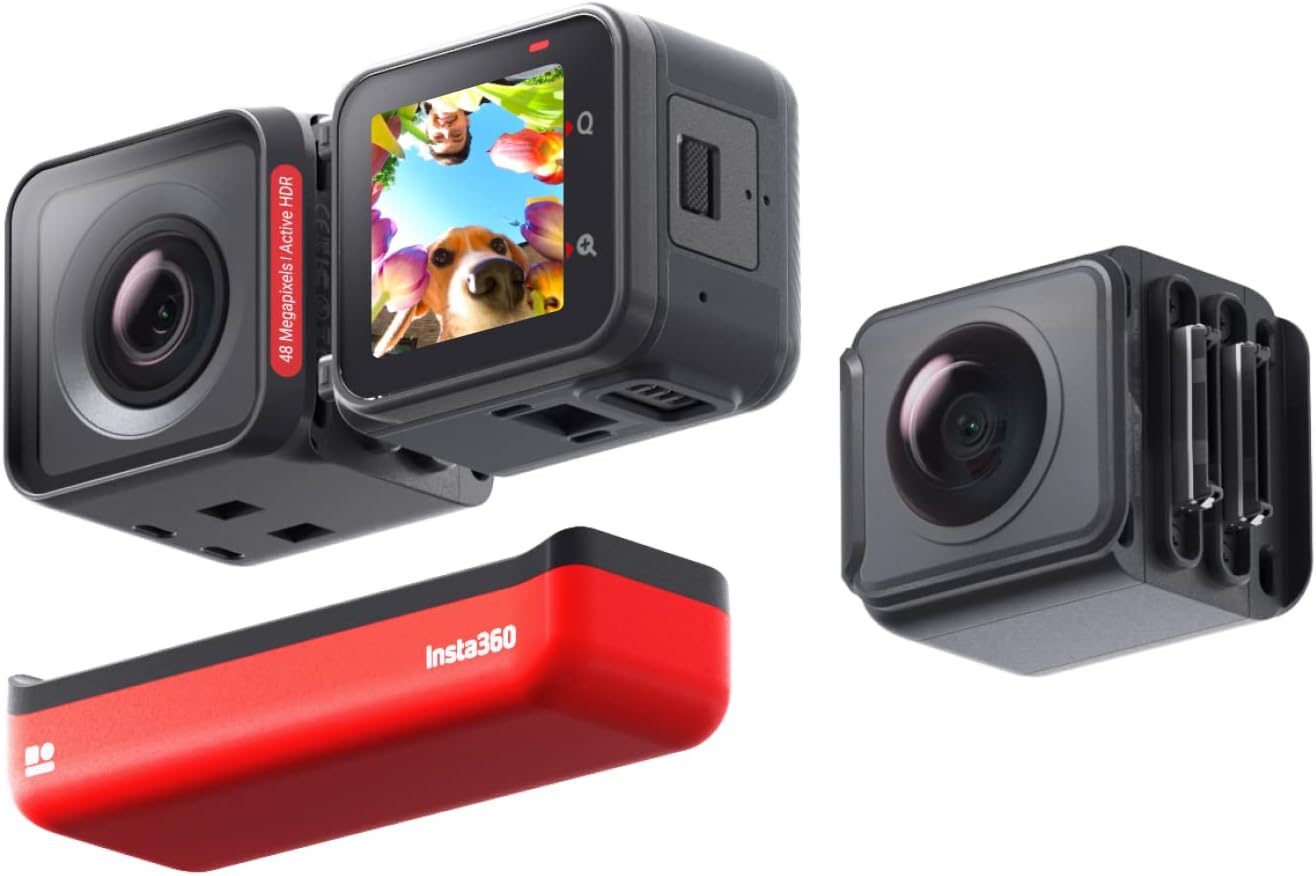
- 4K Boost Lens & 5.7K 360 Lens (2 cameras in one)
- FlowState Stabilization
- 48MP Photos, 6K Widescreen Video & Active HDR Video
The Insta360 ONE RS Twin Edition is also a favorite 360 camera, mainly because it’s so much more – it’s 2 cameras in one, with interchangeable lenses so you can get a 4K action camera, too!
Some people don’t like having to switch out the lenses, and this might not be the best option if you just want a simple camera for your helmet, but it does give nearly endless creative opportunities for video and photo!
Pros – Insta360 ONE RS Twin Edition
✔️ 4K Boost Lens & 5.7K 360 Lens (2 cameras in one) with 60fps
✔️ 48MP Photos, 6K Widescreen Video & Active HDR Video
✔️ Invisible Selfie Stick for for impossible drone-like footage and third-person perspectives
✔️ HDR for action sports
✔️ Multiple Shooting Modes: Standard, HDR, Interval, Night Shot, Starlapse, Burst, PureShot
✔️ Vivid, Standard, or LOG (flat) color profiles for video
✔️ 5x optical zoom
✔️ Waterproof to 16ft (5m)
✔️ Quick Reader in place of WiFi
Cons – Insta360 ONE RS Twin Edition
✔️ You have to physically swap out the lenses
✔️ You’ll probably want to buy a waterproof case for skiing and snowboarding
✔️ Editing 350 videos is time-consuming
✔️ Video may turn off randomly
Specs – Insta360 ONE RS Twin Edition
Weight: 5.7 ounces
Operating Temp: -4°F to 104°F (-20℃ to 40℃)
Memory cards: Micro SD Card
📷 Shoot with the Insta360 ONE RS Twin Edition
Alternative: GoPro MAX
The Best Cameras For Skiing And Snowboarding (Beginner-Level)


- 4K Ultra HD Video with 1080p Live Streaming Webcam
- 3 Levels of Image Stabilization
- LiveBurst setting records 1.5 seconds before and after your shot
The Go Pro HERO 8 is older than the previous ones mentioned, but more affordable for beginner-level. Attach it to your helmet to film as you snowboard or ski!
Pros – GoPro HERO 8
✔️ 12 MP Resolution Photos
✔️ 4K Ultra HD Video with 1080p Live Streaming Webcam
✔️ 3 Levels of Image Stabilization: On, High and Boost with HyperSmooth
✔️ TimeWarp 2.0 for time-lapse videos
✔️ LiveBurst setting to record 1.5 seconds before and after your shot to choose the best frame for photos
Cons – GoPro HERO 8
✔️ Only the rear touch screen with front status screen
✔️ Tends to overheat more easily than newer versions, especially in hot conditions
✔️ Doesn’t work well in low-light conditions
Specs – GoPro HERO 8
Weight: 13.6 ounces
Connectivity: USB and WiFi
Memory Card: Micro SD
📷 Shoot with the Go Pro HERO 8
📷 Get Waterproof Housing for GoPro HERO 8
Alternative: KASO Brave 7 LE Action Camera

- 4K 60p HDR video
- Rugged build
- Comes with waterproof case
The DJI Pocket 2 is in a class of its own – it’s the tiniest and lightest weight camera on this list! Its ultra impressive features include a built-in gimbal for super-smooth video, 4-directional audio, waterproof case and more!
Pros – DJI Pocket 2
✔️ 4K 60p HDR video & 64MP photos
✔️ Rugged build that’s great for travel (plus it’s super small)!
✔️ 3-axis gimbal stabilization, which keeps the camera steady even in low-light settings on long exposure shooting
✔️ ISO range: 100-6400
✔️ 20mm f/1.8 lens provides a wide, vivid cinematic look
✔️ 4 microphones for sound from all directions, plus Audio Zoom, Sound Track & Wind Noise Reduction for audio enhancement
✔️ Up to 140 mins of battery life
✔️ Waterproof case for depths of up to 60 m
✔️ Creator Combo available for vloggers & AI editor to combine footage with transitions & music
Cons – DJI Pocket 2
✔️ Gets hot when filming 4K video
✔️ Not the best in low light
✔️ Not waterproof without the case
✔️ The on/off switch is easy to accidentally press
Specs – DJI Pocket 2
Weight: 116g
Connectivity: WiFi & Bluetooth
Memory Card: MicroSD
Best Point-and-Shoot Cameras for Skiing & Snowboarding

If you’re just looking for a point-and shoot camera that’s made to withstand the conditions for skiing and snowboarding, check out the following best options for you!
Olympus Tough TG-7

- Rugged build, waterproof up to 15 meters (50 feet) and shockproof up to 2.1 meters (7 feet)
- Impressive 4K video capabilities with 120 fps high-speed movie recordings & 44x Macro Shooting
- Enhanced imaging performance with a high-resolution F2.0 lens & 1/2.3-inch back-illuminated CMOS image sensor
The Olympus Tough TG-7 is an amateur-level point-and-shoot, but it’s the absolute best for this kind of camera, especially when it comes to outdoor adventures and sports!
Pros – Olympus Tough TG-7
✔️ 4K video and full HD 120 fps high speed movies
✔️ Water proof (50 feet /15 meter), dust proof, shock proof (7 feet / 2.1 meter), crush proof (100 kgf), freeze proof (14 degree Fahrenheit / -10 degree Celsius), anti-fog
✔️ High resolution F2.0 lens, maximum 8x zoom, back illuminated CMOS image sensor
✔️ 4 macro shooting modes
✔️ Shoots in JPG & RAW formats
Cons – Olympus Tough TG-7
✔️ Limited manual control options & aperture settings make it less suitable for advanced photographers
✔️ Modest 12 MP maximum webcam image resolution might not satisfy users seeking higher image quality
✔️ Slight lens distortion at the wide end of the zoom may require post-correction for optimal results
Specs – Olympus Tough TG-7
Weight: 0.56 lbs
Connectivity: WiFI
📷 Shoot with the Olympus Tough TG-7
Alternatives: Fujifilm XP140, Sony RX100 III

- 4K Video
- Ultra-wide 20mm lens so you can get group selfies
- Slow & Fast-motion settings
The Sony ZV-1F Vlog Camera for Content Creators and Vloggers is a dream for content creators, with settings to make people and products look amazing! It’s not as good for other types of video, or photography, but it’s ideal for vlogging.
Pros – Sony ZV-1F Vlog Camera
✔️ 4K with up to 16fps burst mode, 21MP photos
✔️ Ultra-wide 20mm lens so you can get group selfies
✔️ Slow & Fast-motion settings
✔️ ISO range: 125-12800
✔️ Directional 3-Capsule mic & wind screen accessory
✔️ Product Showcase Setting for product review videos
✔️ Adjustable Soft Skin Effect
✔️ Bokeh Switch for defocused backgrounds that can be switched on & off
Cons – Sony ZV-1F Vlog Camera
✔️ Only supports 720 on streaming video
✔️ It’s a bit more difficult to reach settings
✔️ Not as good for photography
✔️ Additional grip is usually necessary for vloggers
Specs – Sony ZV-1F Vlog Camera
Weight: 0.56 lbs
Connectivity: SD card, Micro-HDMI, Stereo, USB-C, USB-C (2.0), Wi-Fi & Bluetooth
📷 Check prices for the Sony ZV-1F Vlog Camera for Content Creators and Vloggers Here
Alternatives: Panasonic LUMIX FZ300 Digital Camera
Best Mirrorless Cameras for Skiing & Snowboarding

Mirrorless cameras can be the best if you’re looking to practice your photography and video with this kind of camera – usually if you’re filming others, or stopping along the way for viewpoint photos and more!

- 4K uncropped video
- Continuous video recording for up to 1 hour
- UVC Livestreaming with Full HD 30fps video
The Canon EOS R50 Mirrorless Vlogging Camera is made for vlogging, letting you record in 4K without sacrificing precious frame space, recording for up to an hour uninterrupted, and more amazing features!
Pros
✔️ 4K uncropped video, 24.2MP photos
✔️ Compact & Lightweight for traveling
✔️ Close-up Demo Mode quickly switches focus for product videos
✔️ Continuous video recording for up to 1 hour
✔️ UVC Livestreaming with Full HD 30fps video
✔️ ISO range: 100-51200
✔️ Dual Pixel CMOS AF II has 651 AF zones with auto subject detection and tracking of people, animals & vehicles using deep learning technology
✔️ Advanced A+ Assist offers an expanded array of auto-compatible scenes
GPS data with Bluetooth connection & CanonConnect app
Cons
✔️ Rolling shutter and no Dual Pixel AF in 4K
✔️ Lacking some manual controls
✔️ No USB charging capability
Specs
Weight: 1 lb
Connectivity: USB Type-C(4) port, MicroHDMI, WiFi & Bluetooth
📷 Check prices for the Canon EOS R50 Mirrorless Vlogging Camera Here
Alternatives: Nikon Z30 Mirrorless Digital Camera

- Up to 30 FPS shooting with world's first 240 FPS refresh rate
- Range of selectable continuous shooting speeds
- World’s first anti-flicker mechanical and electronic shutter with live feed (no blackouts)
The Sony A1 has a high price tag, but the rave reviews prove that to those who want a perfect (or near-perfect) award-winning camera, it’s well worth it!
Pros – Sony A1
✔️ 50.1 MP Full-frame resolution
✔️ Up to 30 FPS shooting with world’s first 240 FPS refresh rate and range of selectable continuous shooting speeds (20, 15, 10, or 5 fps) assignable to Hi, Mid, and Lo drive modes
✔️ World’s first anti-flicker mechanical and electronic shutter with live feed (no blackouts)
✔️ New color profiles designed for both stills and video with added customization settings
✔️ New BionZ XR engine, which is 8x faster than Sony’s previous one. This means faster continuous shooting, autofocus and more
✔️ Improved anti-distortion shutter technology
✔️ Improved autofocus with real time Eye AF
✔️ 8K Video Recording
Cons – Sony A1
✔️ Expensive (see alternatives below)
✔️ Still can’t do more than 120p in Full HD Video and RAW output is only available in 4K
✔️ Auto Stabilization still crops – it’s better to stabilize in post
Specs – Sony A1
Weight: 1.60lbs
Connectivity: Bluetooth, USB, HDMI, NFC
Memory cards: 2 memory card slots

- 4K 2160p Video Resolution
- Continuous shooting up to 60 FPS
- 693 phase detection with 425 contrast AF points
The Sony a7 III is a full-frame mirrorless that has also won awards for mirrorless cameras.
Pros – Sony a7 III
✔️ 24.2 MP Resolution with Full Frame Sensor with 1.8X readout speed
✔️ Continuous shooting up to 60 FPS
✔️ 693-Point Hybrid AF System
✔️ 5-Axis SteadyShot inside image Stabilization
✔️ ISO 50 to 204,800
✔️ 693 phase detection with 425 contrast AF points
✔️ 4K 2160p Video Resolution
✔️ Weather-sealed
Cons – Sony a7 III
✔️ Can overheat when shooting video longer than 30 minutes
✔️ Autofocus can be finnicky
✔️ Limited touchscreen control
Specs – Sony a7 III
Weight: 1.44 lbs
Connectivity: HDMI, NFC and Bluetooth with Android 5.0 or later and Apple iOS Bluetooth 4.0 or later
Memory cards: 2 memory card slots
Alternative beginner mirrorless: Canon EOS M50 Mark II
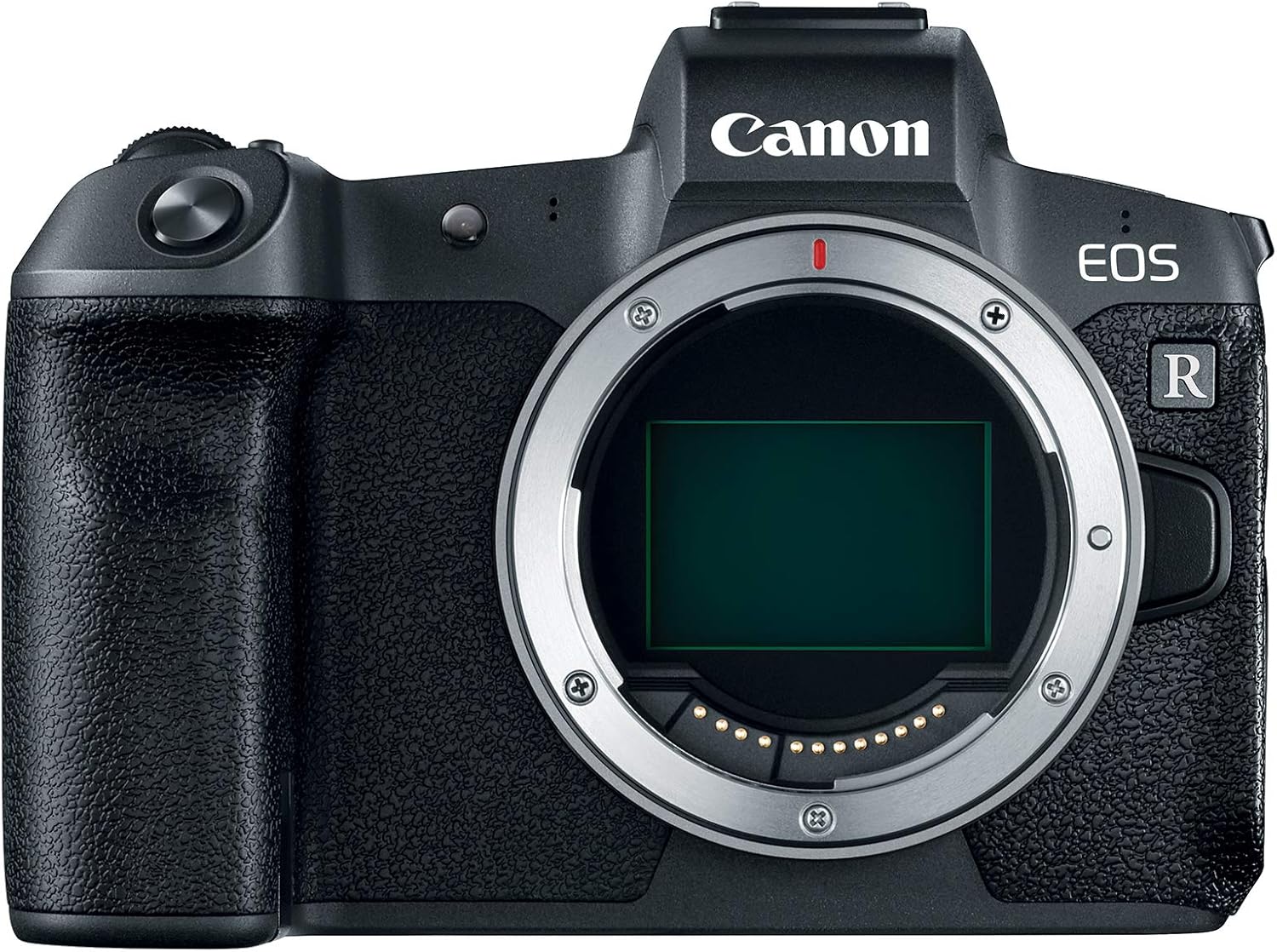
- Dual Pixel Autofocus with manually selectable points, focuses in up to 0.05 seconds for action shots
- Continuous shooting speeds of up to 12 FPS for fast-moving subjects
- Shockproof, Temperature Extremes, Waterproof and X-Ray Proof
The Canon EOS R is weather-sealed, great for traveling and taking photos and videos. It has amazing reviews and is great for skiing & snowboarding photography with its resolution, FPS, high image quality, controls and more features!
Pros – Canon EOS R
✔️ 30.3 MP Resolution with full-frame sensor
✔️ Dual Pixel Autofocus with manually selectable points, focuses in up to 0.05 seconds for action shots
✔️ Continuous shooting speeds of up to 12 FPS for fast-moving subjects
✔️ Flexible priority mode which allows more control over shutter speed and ISO settings
✔️ Lightweight and durable, made with magnesium alloy chassis which protects from electromagnetic radiation and heat
✔️ 54mm diameter and decreased distance between rear lens element and sensor for improved image quality
✔️ Shockproof, Temperature Extremes, Waterproof and X-Ray Proof
Cons – Canon EOS R
✔️ Mirrorless viewfinder isn’t the same as optical, and takes time to adjust to (but you do get to see what the actual photo looks like instead)
✔️ Battery life not as long as DSLRs, so you may need an extra battery
✔️ No in-body image stabilization
✔️ Crops 4K video and maximum video quality for 120 FPS is only 720
Specs – Canon EOS R
Weight: 1.46 lbs
Connectivity: Bluetooth, HDMI
Memory cards: One memory card slot
Alternative intermediate mirrorless: Sony A7 IV
Best Drone for Skiing and Snowboarding

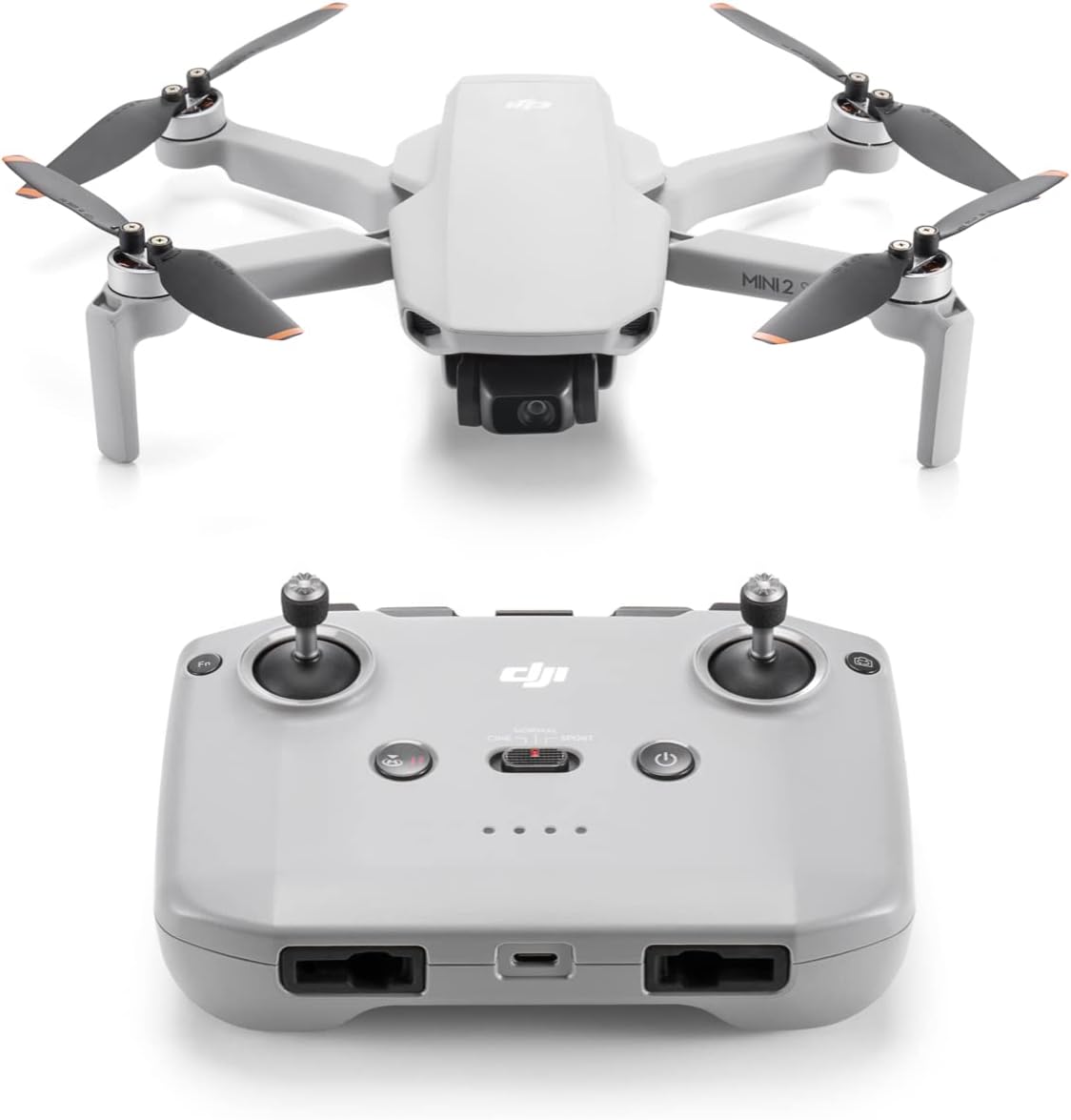
- 2.7K, 1080p video resolution
- Beginner-friendly and has a return-to-home function for safety
- Easy-to-use templates allow automatic flying with professional-level video creations to share directly on social media
The DJI Mini 2 SE is the best affordable drone for skiing and snowboarding because it’s lightweight and foldable, plus it’s smaller to begin with which makes it the best to travel with. It also has intelligent modes and is easy to use.
Pros
✔️ 2.7K, 1080p video resolution
✔️ Beginner-friendly and has a return-to-home function for safety
✔️ 31-min. max flight time (Combo available with 2 extra batteries for up to 93 minutes of total flight time)
✔️ Easy-to-use templates allow automatic flying with professional-level video creations to share directly on social media
✔️ Advanced Transmission Range – 10km max range to reliably fly farther & capture more with DJI OcuSync, which is significantly stronger than WiFi
✔️ 38kph (Level 5) Wind Resistance
Cons
✔️ The fly app crashes too much
✔️ No active tracking
✔️ Lacks object avoidance
Specs
Weight: 0.53 lbs
Connectivity: USB & DJI OcuSync
Best Smartphones for Skiing & Snowboarding Photography

If you’re set on using your smartphone but still want the best photos and video possible, here are your best options:
- Google Pixel 7 Pro (or 7)
- Samsung Galaxy S23 Ultra (or S22)
- Apple iPhone 14 Pro (or 13 pro)
- Samsung Galaxy Z Fold 4
- Sony Xperia 1 III
Pros
✔️ You already have your phone with you everywhere, so no need to bring another camera
✔️ You’re already spending money on your phone, so you’ll get 2-in-1
✔️ Phones are really excellent quality these days and only getting better
Cons
✔️ You won’t get as good of photos or videos as you will with a higher quality camera and lens
✔️ You won’t be able to learn as much about how to use an actual camera
✔️ You won’t get RAW photos that you can make big prints or edit as fully
✔️ You’ll need a waterproof phone case to protect your phone from the snow and cold, like this one
Tip: Download my guide via email on how to take the best photos on your smartphone at the end of this post – You’ll get a choice of downloading a guide for Android or iPhone!
Important Things To Consider When Choosing The Best Cameras for Skiing and Snowboarding Photography

✔️ Price
Make sure the camera you choose fits in your budget – you can always level up later on!
✔️ Type of Camera
For most people, action and 360 cameras are best for skiing and snowboarding because you can hook it to your helmet or clothing and go (or use a selfie stick, though this isn’t as safe or easy)! However, if you’re planning on practicing more traditional photography and video, or making a video of others on the slopes, you might want to consider adding a Mirrorless to the mix.
✔️ Features
Check all the features and make sure the camera is to your specifications. Once you buy it, give yourself some time to play around with it to discover all the new features and get used to the way it works – most cameras will have unique settings, buttons and character!
Gear You’ll Need for the Best Cameras for Skiing and Snowboarding Photography
Skiing & snowboarding photography equipment you’ll need includes:
✅ High-Quality SD cards
High-quality cameras are not made for regular SD cards. Especially doing video, I learned this the hard way when I first started out (my first DSLR came with a standard SD card). You need the best card to ensure you’re going to get the video without it stopping, say, every 10 seconds – and same goes for photos, especially with continuous shooting so you don’t end up with your camera stalling in-between shots.
I’ve been using SanDisk Extreme Pro Memory Cards for years.

- Beginner-friendly with room for growth
- Best for taking more photos & video
- Temperature Proof, Water Proof, Shock Proof & X-ray Proof
- Affordability

- Offload speeds of up to 190MB/s powered by SanDisk QuickFlow Technology
- Up to 90MB/s write speeds for fast shooting
- 4K and 5K UHD-ready
- Rated A2 for faster loading and in-app performance
✅ External Hard Drive for backups
Always back everything up in 2-3 places! This is usually on the cloud, on your computer and on an external hard drive. Seagate is one of the top brands for external hard drives, and I’ve used them for years.

✅ Helmet Mounts & Accessories
This 50 in 1 Action Camera Accessory Kit works with GoPro Hero 4-11, GoPro Max, GoPro Fusion, Insta360, DJI Osmo, AKASO & more cameras – plus, it’s a best-seller and highly rated!

✅ Waterproof Housing
For cameras, you’ll need to find a specific housing for the camera you choose to buy.
For Android and iPhone, this diving waterproof housing is top-rated:

📷 Get Diverbox for iPhone/Samsung Galaxy/Android Phone Case Waterproof Underwater Phone Case
✅ Editing software
The best editing software is Adobe Lightroom and Photoshop. It’s easy to use and you can edit the colors, lighting and more to make it look more realistic and professional.
If you’re looking for something that’s easier to use (if you’re not an expert) and affordable, and that can act as an extension for Photoshop & Lightroom with filters and more, check out Luminar Neo!
✅ Camera Cleaning Kit
This Altura Photo Professional Camera Cleaning Kit is an excellent choice for a high-quality kit for your camera and lens! It’s really important to have one on hand, and to regularly clean your gear, after being subjected to the elements all day.

- Absorbs and sweeps away invisible particles and smudges
- Compatible with APS-C sensors
- Uses the power of nature to clean without leaving streaks or blemishes
- Safe for all electronics, coated lenses and sensors
- Comes in a convenient travel case
✅ 4-In-One Travel Tripod
The best tripod for surf photography is one that is versatile, so you can use it with your camera or phone, or even as a monopod or selfie stick. This one is also perfect for traveling and walking around because it folds up smaller than most and is lightweight:

- Beginner-friendly with room for growth
- Works with smartphones & cameras
- Folds up small & lightweight
- Turns into a selfie stick & trekking poles
- Comes with a carrying case
- Affordability
✅ Camera Insurance
If you’re going to be taking your camera and gear into the water, or doing other sports, you may want to spring for insurance. Companies like Progressive and Nationwide offer insurance for cameras and photography businesses.
✅ Waterproof Backpack
The Peak Design Everyday V2 20L waterproof hiking backpack will fit your camera and accessories – plus other things you need, of course! Also, it’s top-rated by reviewers and companies alike, so it’s definitely one of the best ones out there.
✅ Waterproof Camera Case
I absolutely love this waterproof case for my DSLR and lens. It’s not 100% sealable – it has a velcro cover – but it’s made to fit inside any backpack! I love that I can switch it out between my travel and hiking backpack.

- DIY Camera Bag Magic
- Shock & vibration-absorbing design
- Weather-Ready & Feather-Light
✅ Camera Strap or Clip
Get a high-quality camera strap or clip – and, if you’re going to be hiking with your camera you may want a clip or even a harness. Check out these amazing options for hiking and backpacking:
✅ Remote Shutter (this one works with Canon cameras)
A remote shutter helps you take long-exposure photos at night and sunrise/sunset with your tripod, and for continuous shooting and any kind of photo remotely for less blurry, clearer shots!

- Compatibility with a lot of cameras (be sure to check for yours)
- Works at 2.4GHz frequency with 16 available channels
- Reduces camera shake
- 5 Shooting Modes
👉 Remote shutter (2-pack) for smartphones:

- Seamless Selfies and Steady Shots - Compatible with Social Media Apps
- Pocket-Sized Convenience
- Operational range of up to 30 feet (10 meters)
✅ Other accessories for the best cameras for skiing and snowboarding photography
Some of these accessories are just for DSLR/Mirrorless cameras, so see what you need for the type of camera(s) you have or plan to buy!
- Lens for DSLR and Mirrorless cameras – this is up to you, and you. can have multiple ones. I recommend getting a good zoom lens since you’ll need to have a good range of focus with skiing and snowboarding.
- UV Protection Lens Filters – these can help protect your lens and camera from the sun, like sunscreen!
- Circular Polarizer – These help you get better photos, especially of water reflections and the bottom of clear water. Just make sure to get the right size to fit your lens!
- Backup battery and Backup Battery charger – you’ll need these for those times when you forget something or when you run out of battery charge.
- Backup lens cover – if you drop yours in the snow, you’ll want a backup for sure!
- Bag of rice – this is great to have on hand for skiing & surf photography in addition to your cleaning kit in case you actually drop your camera or phone in the snow!
What Your Camera Needs For Skiing and Snowboarding Photography

When it comes to skiing and snowboarding photography, you might be primarily photographing or making videos of yourself, or you might be taking footage mostly of others (or both)! You’ll just need to prioritize water-sealing and water resistance, plus get the best water-housing for your camera for protection from the elements!
Environmental and Element Protection
Your camera needs waterproof protection plus protection from the moisture in the air, the cold and more. You’ll need:
✅ Weather-sealing. Most cameras (and lenses) will say if they’re water resistant and/or water-sealed.
✅ Waterproof housing. Especially for the snow and sleet, you’ll need waterproof housing, which you can buy separately. You can also bring a rain sleeve for added protection when you’re not using waterproof housing.

- It's a good idea to bring a rain cover, like this one, in case of incliment weather, rain, snow and more for cold weather (make sure to get one that fits your specific camera and lens!)
The Right Lighting Features
Lighting is extra important with surf photography because weather conditions vary, which means constant lighting changes. You’ll need control over things like ISO (some cameras have automatic, some offer manual controls for this), as well as a camera that can capture the most realistic lighting and colors, even the most cloudy or sunny of days.
✅ Full Frame Sensors are better than cropped because:
- Full frame sensors allow more light to enter, which lets you capture a more complete range of color and mood.
- If you’re using a wide angle lens, it also helps your photos have more realistic (less warped) angles.
- Your camera sensor determines the type of lens you can buy, so if you get a full-frame camera, you’ll usually only be able to fit full-frame lenses. This is a good thing, because even if you’re not a pro, your camera is an investment.
✅ F-stop and Aperture
The Aperture is a hole in the lens that has an opening for light. It determines how much light comes into the sensor. The aperture’s blades (or diaphragm) opens and closes when you take the photo. If they aperture is low, the opening is smaller, and if it’s high, the opening is wider. This makes your photos lighter or darker, and also determines the depth of field, which is how much of your photo appears in focus versus blurry.
If you can control the aperture, you can control your photos more.
The F-stop (or F-number) is the ratio of the lens focal length to the diameter of the entrance pupil, or basically the number you see when you adjust the aperture size. This is basically the aperture written out as a fraction. For example, f/2 is larger than f/16, which is smaller.
People will pay much more for cameras that allow for a larger maximum aperture, particularly for low-light photography and for allowing for more depth of field. The minimum f-stop isn’t as important.
✅ ISO
You can use ISO to brighten photos (by increasing it) when the weather conditions aren’t light enough, like on cloudy days or even at night. Cameras with a range of around 400-200 are needed for surf photography. You will only need ISO when the aperture and shutter speed don’t do enough for your photos.
The Right Camera Features for Fast Skiing and Snowboarding photography
Skiing and snowboarding photography are types of sports photography. Skiers and snowboarders move extremely fast, and if your camera can’t capture the action, you’ll miss the moment when “the shot” happens. Here are the features to look for in a camera to capture the action:
✅ 12 or higher Frames Per Second (FPS)
Look at this to see how many photos you can take per second continuously. This is absolutely important for action photos… 12 or higher is the best. Don’t go lower than 5.
✅ Shutter Speed for Fast Burst Shooting
This is about the light that your camera takes in. If it’s too low, your photos will turn out blurry, especially with motion as in skiing/snowboarding. In contrast, you want slow shutter speed for night photography, but everything has to be still because of the long exposure. Fast shutter speed means shorter exposure time.
✅ Autofocus
Autofocus is always important, and even more for beginner and intermediate photographers. It’s normal for photographers to be snobby about not using auto-anything, but don’t listen. No one is going to know if your amazing shot was made with autofocus… and you’ll get more amazing shots with it on!
I always like to experiment with both to make sure I get non-blurry shots (if I happen to not see the image clearly enough on the viewfinder).
✅ FPS
FPS is the frame rate, or number of frames recorded, per second when capturing video. The higher your frame rate, the smoother your videos will be, which is especially important for fast-moving subjects.
✅ Continuous Drive (Burst) Mode
Continuous Drive, or Burst Drive Mode is when you hold down the shutter button and your camera continues to take photos. It’s great for skiing and snowboarding photography, so you can ensure that you’ll get the shot, or even to capture a series. The higher the burst mode, the more shots you’ll be able to capture!
Durability for The Best Cameras For Skiing and Snowboarding Photography
Durability will depend somewhat on the type of camera you buy, and a lot on how well you care for it (see how to make your camera last longer at the end of this post).
Higher-level cameras are built to be more durable, which is part of the reason for the high price tag.
✅ Weather-sealing
I’ve mentioned this already, but it’s an aspect of durability to ensure you’ll get a camera that can withstand the weather conditions for skiing and snowboarding photography.
✅ Construction materials
The most durable and high-quality cameras are crafted with a single piece of metal. Many lower-priced cameras are made with plastic, and can still be quite durable.
✅ Shutter actuations (DSLR)
This varies by model and there are estimations for how many each model is expected to have. Usually, you’ll be wanting to upgrade by the time the camera wears out, if you care for it well!
Additional Needs for Best Cameras For Skiing and Snowboarding Photography
Here are a few more things to consider when choosing the right surf photography camera for you:
✅ Video capability
Unless you’re never going to want to capture video, this is important. A high FPS, as mentioned earlier, is a factor to consider, and how long the camera can capture video (usually not more than 30 minutes at a time). With social media, it’s definitely a plus to have high quality video capability!
✅ WiFi capability
Having WiFi lets you automatically send photos from your camera to your phone or laptop, as well as taking photos from your phone with an app (selfie, anyone?). This is helpful for getting backups to ensure you get each photo safely to your computer, or for being able to send photos to others or yourself on-the-go without messing with the memory card download process.
✅ RAW image format
Shooting in RAW is very important because it captures more data so you can edit, print large photos and more, all of which will give you the highest-quality, professional photos to share!
Making your camera last longer for skiing and snowboarding photography
✅ Don’t leave batteries or memory cards in for long periods of time
✅ Don’t charge your battery or camera on the wrong kind of charger (you could ruin it)
✅ Keep your camera out of extreme cold (or heat), or high moisture for long periods of time. Also don’t take your camera from one extreme temperature into another right away. You can use a bag to prevent damage for this kind of circumstance.
✅ Use a high-quality camera strap or clip and avoid letting your camera bump or bounce around too much
✅ Use a protective bag specific for cameras when traveling
✅ Know how to use your mounts, selfie stick and tripod and always make sure everything is secured and leveled correctly.
✅ Always turn the power off immediately when you’re not using the camera
✅ Bring a soft cloth, bag of rice and cleaning kit to make sure it’s dry at all times
✅ Keep your lenses clean
✅ Let the professionals take care of anything else
FAQs for The Best Cameras For Skiing And Snowboarding

👉 What camera do snowboarders use?
Snowboarders typically use an action camera, like a GoPro or a 360-degree camera, like the Insta360. These cameras are made to attach to helmets and more things, to catch the action and wider-angle views. Many also come with stabilization so the shots aren’t overly shaky (you can usually turn this off and on for your own preferences).
👉 What are the best cameras for snowboard videos?
If you’re taking video of yourself while snowboarding, a GoPro or Insta360 is the best camera for capturing as much as possible of the action! Especially with the 360 camera, you can get every angle possible all at once!
👉 How do you film while snowboarding?
The best way to film while snowboarding is to choose an action camera to attach to your helmet or gear, like a GoPro or Insta360. Simply turn the camera on each time you want to record – action cameras tend to have a bit less continuous recording times, so you can just turn it on right before you hit the slope!
👉 Which AKASO camera is best for skiing?
The AKASO Brave 8 is the best camera for skiing and snowboarding because it’s the most updated version with all kinds of amazing features! Read more here.
All In All: The Best Cameras For Skiing And Snowboarding
I hope this guide helps you find your perfect camera(s) and gear for skiing and snowboarding!
Where to Travel for Skiing and Snowboarding Photography
📸 The best photo spots in Colorado Springs, CO
📸 The best photo spots in Denver, CO
📸 The best photo spots in Salt Lake City, UT
📸 Check out my Scandinavia travel guides here
More Photography and Gear Guides
👉 Read more about surfing and water-based photography gear in this guide!
📸 8+ Best Cameras For Cold Weather + Winter Photography Tips
📸 The Best Cameras For Landscape Photography (For Every Skill Level)
📸 The Top 5 Best Camera Straps For Backpacking
📸 Best Cameras + Lens Kits for Landscape + Wildlife Photography
📸 21 Best Cheap Cameras For Travel Photography Beginners
📸 The Best Travel Photography Gear For Beginners (for all types of photography)
📸 10 Best Intermediate-Level Cameras For Travel Photography
📸 5 Best DSLR Cameras Under $300
📸 Mukikapup’s Ultimate Travel Photography Guide
📸 15 Ways To Capture The Best Landscape Travel Photography
📸 Amazing Lake Photography Ideas
📸 33 Unique Gifts For Photographers
📸 The 9 Best Mirrorless Cameras Under $1000 For Travel Photography

Planning Your Trip? Use my favorite resources:
Accommodation: Booking.com
Rent a Car: Discover Cars
Travel Insurance: Allianz
Flights: WayAway
Tours: Viator.com
Airport Transfers: KiwiTaxi
